Genius helps marketers take the guess work out of making marketing decisions.
Capstone MBA turned startup.
Skylar Hinrichs, Product Manager
Kenneth Burke, VP of Marketing
Thomas Harris,
VP of Cloud and Managed Services
Anna Wagner, Product Designer
Kevin Seveur, Senior Engineering Manager
June 2025 - present
Problem Identification
Discovery & Market Research
Business Strategy
Workshop Facilitator
Lead Designer
Front end developer
Process
Our goal, as part of our MBA in Management of Technology, was to:
- Problem identificiation through 190+ discovery interviews
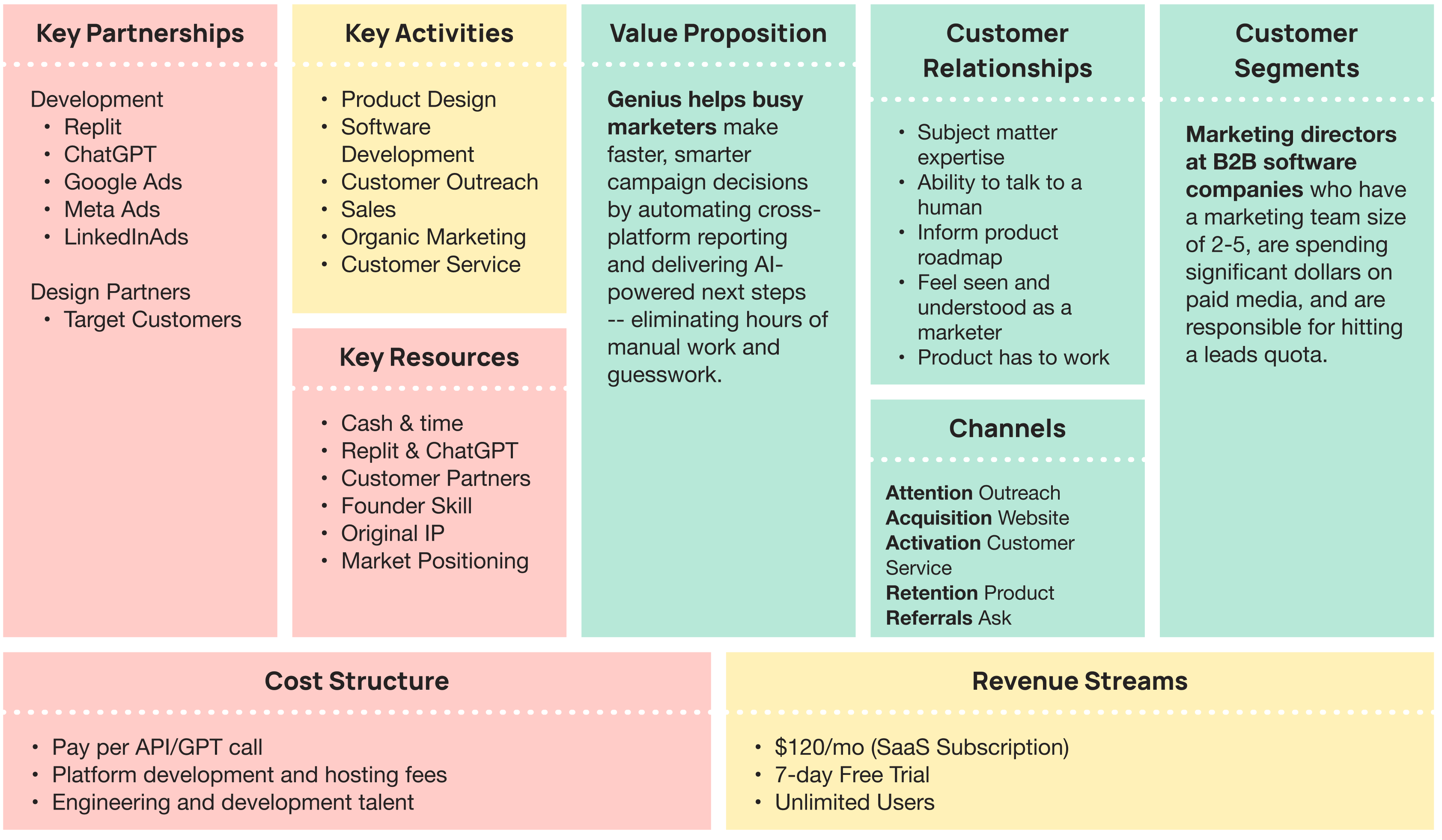
- Business Model Canvas creation to help define value props, customersegment, revenue model, etc
- Prototype an MVP using Replit
- Final presentation to Atlanta startup community consisting of investors and founders
190+ Customer Discovery Interviews
We identified the initial hypothesis that marketers make decisions based on vibes and data because they’re swimming in dashboards, spreadsheets, and disparate data from different systems, so they rely on their gut to make final decisions.
Discovery Synthesis themes
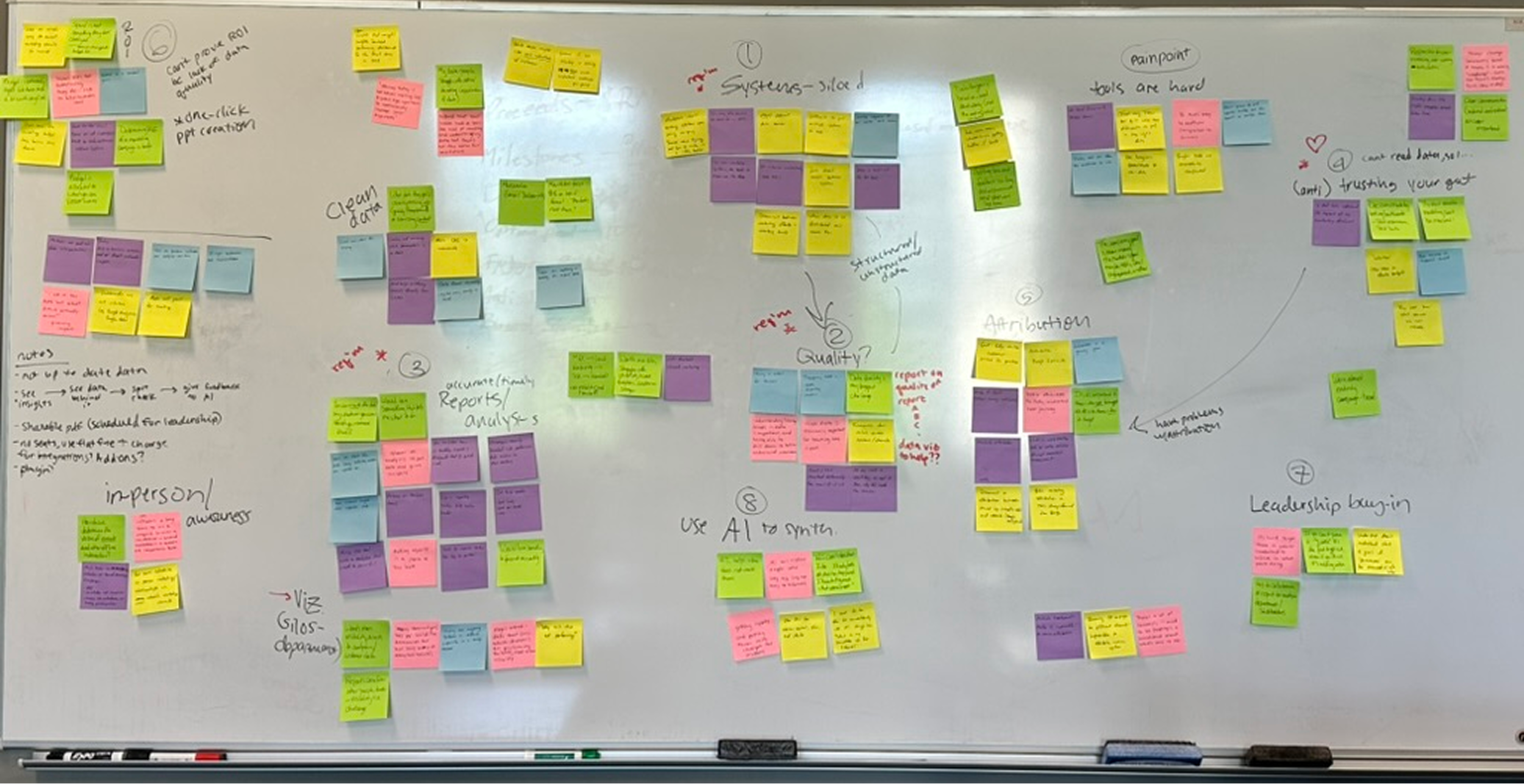
Key Themes
Different departments control different sets of data. Tough to get everything together. Marketers must request data repeatedly.
Data is inconsistent across systems and between employee inputs. It must be cleaned and quality-checked consistently.
Reports are late, inaccurate, or missing data. Marketers cannot trust the reports they get, and often ignore them.
Without better info, markets make decisions based on post experiences and current feelings
Marketers struggle with attribution, limited visibility into the customer journey across touchpoints and stages.
Because of poor data systems and processes, marketers are making educated guesses on ROI. They don't really know what works.
Lack of proof in marketing creates skepticism from other executives and departments. Trust in marketing suffers.
Marketers try to get the right data this time, but are blocked, and the cycle continues.
Business Model Canvas and problem definition
The BMC (Business Model Canvas) Framework was used to iterate on our alignment between the Customer Segment and the Value Proposition. Other frameworks were used to define our customer segments, such as an ecosystem and journey map.
Business Model Canvas
Beachhead definition to narrow in on target customer segment and value prop
Through interviews and analysis of a Beachhead customer, ecosystem map and aligning customer segment with a value proposition.
Beachhead. Targeting Marketing Directors in growth stage companies.

Understanding the customer and their needs.
Customer: Marketing Directors
Role: Marketing Director of a small (2-5 person) team
Experience: 10+ years in digital marketing
Key Challenges
Tracking effectiveness throughout the marketing funnel
Optimize results while campaigns are running, not after they've ended.
Reliance on other teams for reports and up-to-date dashboards
Key Motivations
Internal: The 'aha' moments when the strategy clicks with customer needs.
External: Pressure from leadership to hit lead quotas
Customer Journey
Scenario: prepare and launch campaigns across multiple channels, typically Google Ads, LinkedIn, and Meta platforms.
Overall journey

Focus Point that aligns with Customer Segment and Value Prop:
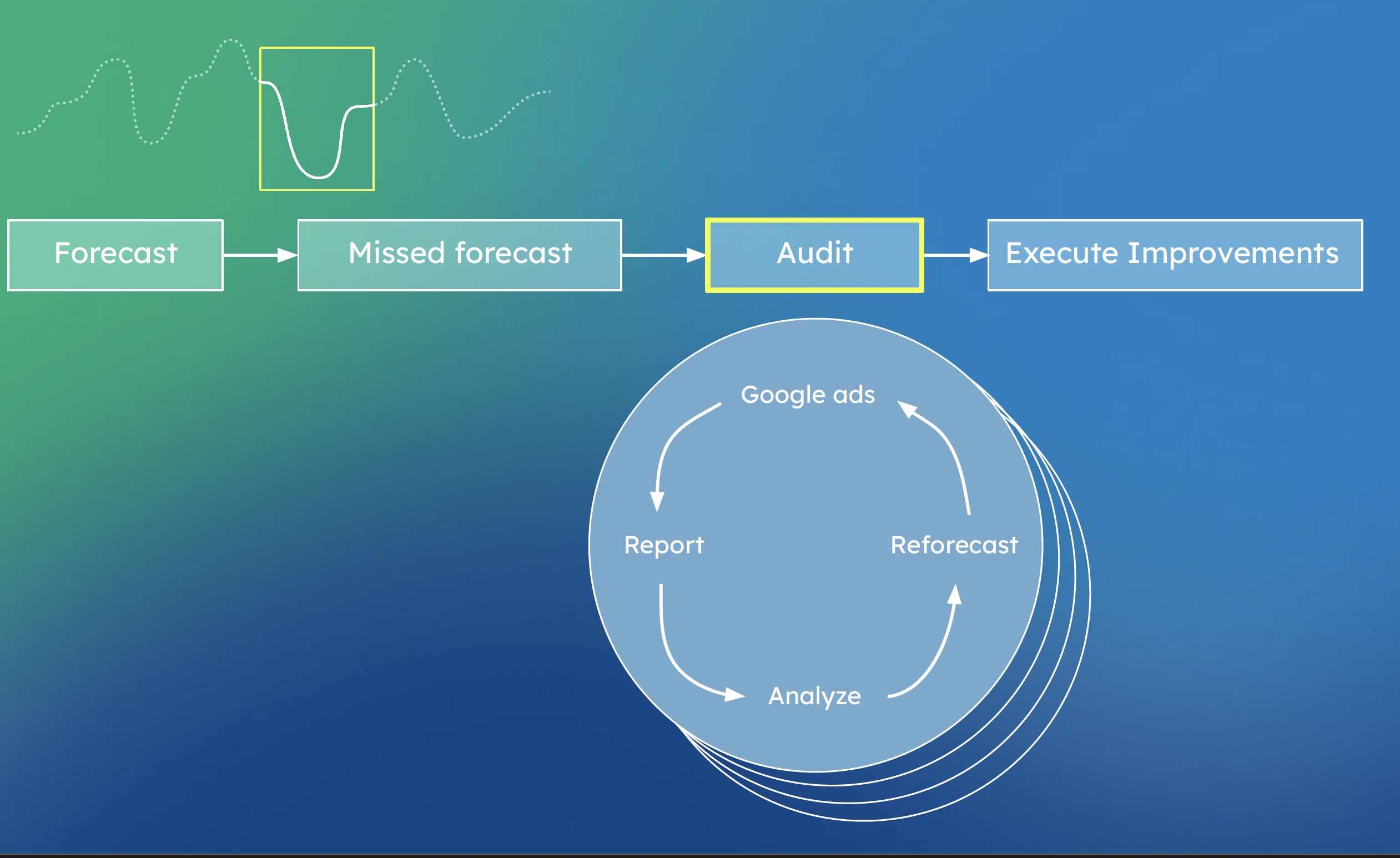
Initial Prototype for Concept Validation
We used Replit to create a click-through POC prototype to test with marketers in our customer segment. This allowed us to validate our hypothesis, make quick iterations, and get closer to defining the MVP.
Focus Point that aligns with Customer Segment and Value Prop:


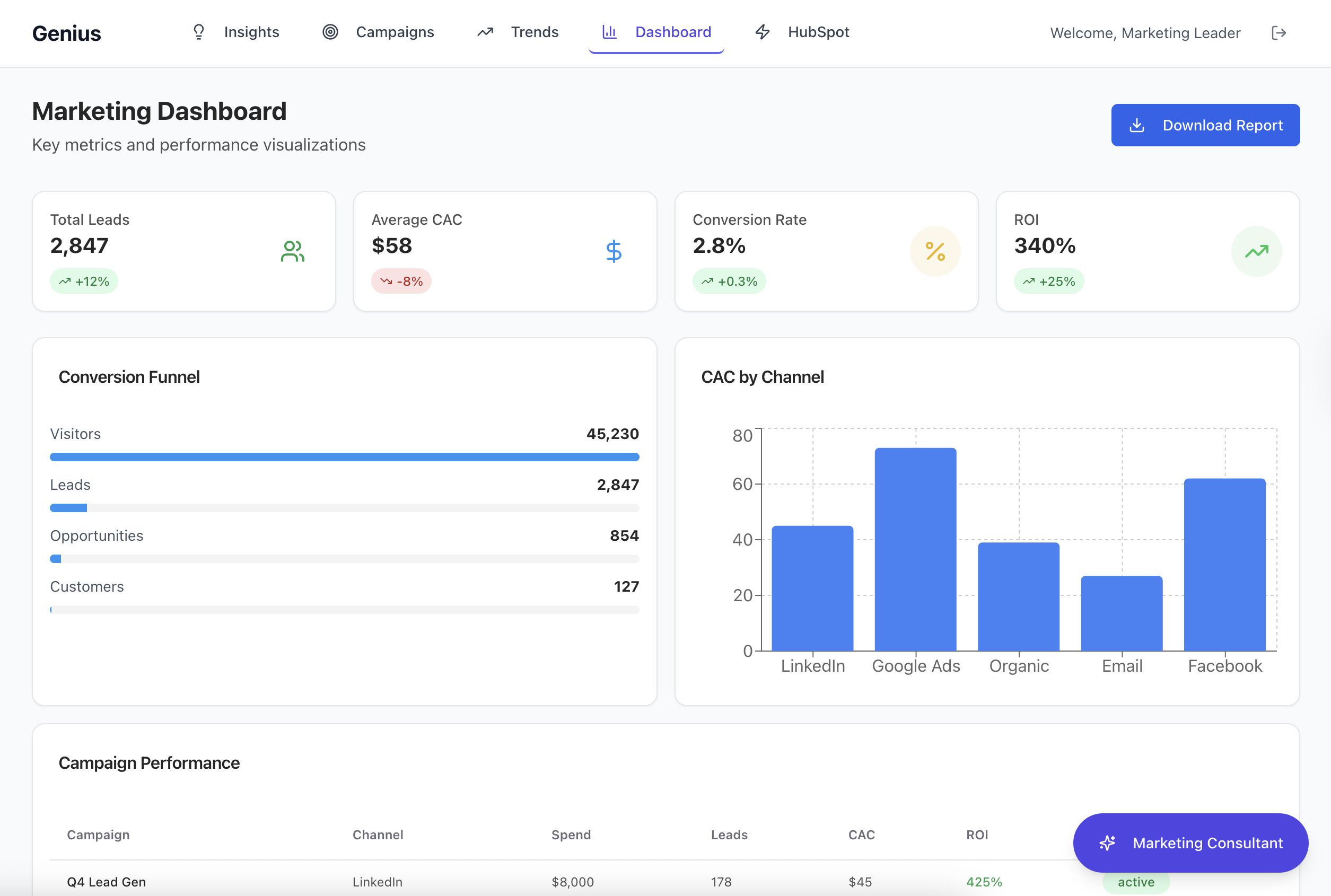
MVP Prototype
After getting feedback, forming as a company, creating a marketing site, and successfulling completing GT's Create-X incubator, we presented this prototype at the showcase. Development currently in progress using Claude Code.