
Calendly B2B: Scaling individual user delight to enterprise-grade scheduling
A series of projects that pioneered Calendly’s B2B strategic initiative by shipping security, governance, and scale without sacrificing simplicity.
Key Projects
Shared Event Types (team collaboration primitive)
Admin-Managed Event Types (governance + scale)
SAML/SSO + Audit Log (enterprise trust)
Workspaces (org structure)
Object-Level Permissions (control + safety)
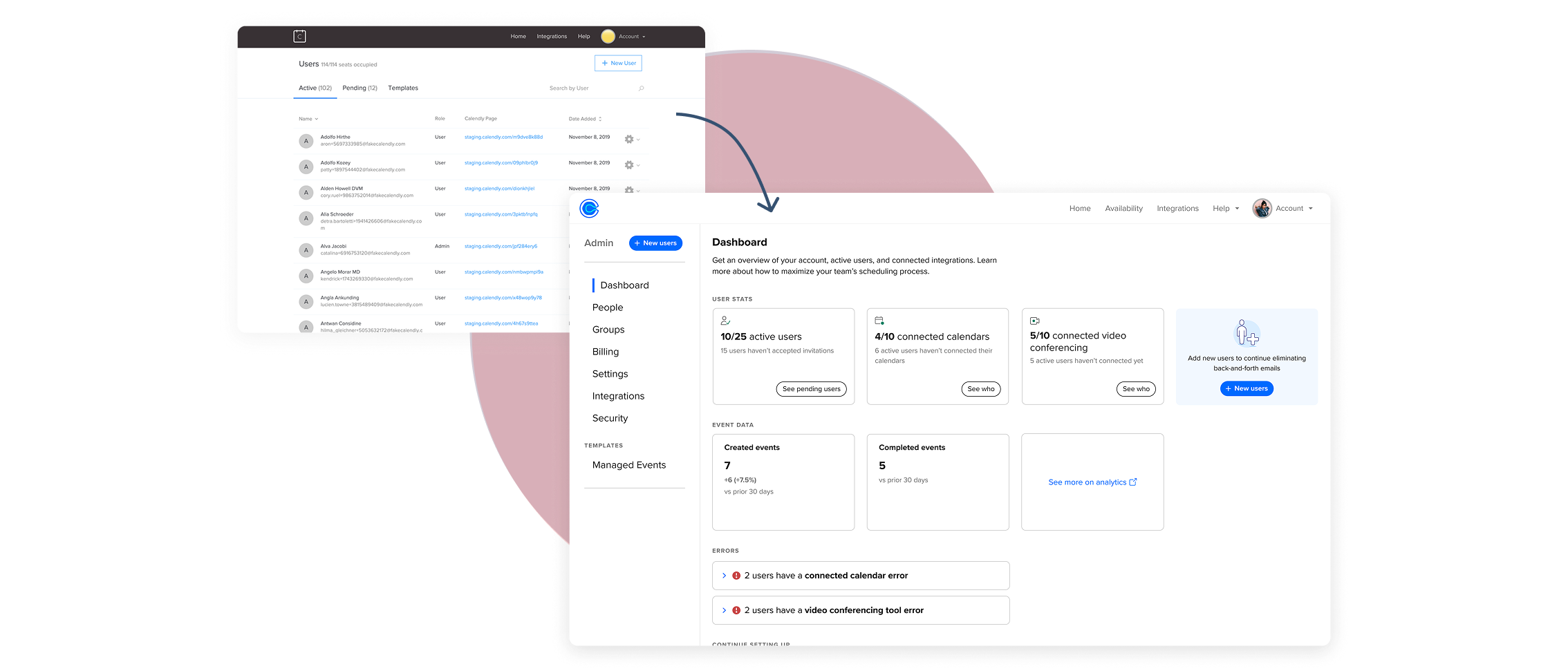
Admin Dashboard (adoption + seat management)
Basics
2019 - 2023
Senior Product Designer
Expanded design team by 2 designers, 2 PMs, and 8 engineers
Researched, design and built 10 features
Supported 2 scrum teams — 2 PMs, 12 Engineers
Phases
PHASE 1
Create a collaboration primitive that felt effortless
PHASE 2
Turn team usefulness into admin-ready standardization
PHASE 3
Earn enterprise trust with security + compliance signals
PHASE 4
Build the org model—structure + permissions that scale
PHASE 5
Help managers measure adoption of the system
Basics
2019 - 2023
Senior Product Designer
Expanded design team by 2 designers, 2 PMs, and 8 engineers
Researched, design and built 10 features
Team: 2 PMs, 12 Engineers
Skills
Discovery interviews & research
User journey mapping
Growth and experimentation
Technical discovery
Usability testing via Usertesting.com and with customers
Wire framing
Development ready hi-fidelity designs
Phases
PHASE 1
Create a collaboration primitive that felt effortless
PHASE 2
Turn team usefulness into admin-ready standardization
PHASE 3
Earn enterprise trust with security + compliance signals
PHASE 4
Build the org model—structure + permissions that scale
PHASE 5
Help managers measure adoption of the system
Key Projects
Shared Event Types (team collaboration primitive)
Admin-Managed Event Types (governance + scale)
SAML/SSO + Audit Log (enterprise trust)
Workspaces (org structure)
Object-Level Permissions (control + safety)
Admin Dashboard (adoption + seat management)
Calendly had won over individuals, now it needed to win businesses and teams.
Calendly’s success spoke for itself with individual users. But by 2019, it was clear the next stage of growth required serving organizations: sales teams, customer success teams, recruiting teams, and cross-functional groups that schedule external meetings every day.
PHASE 1
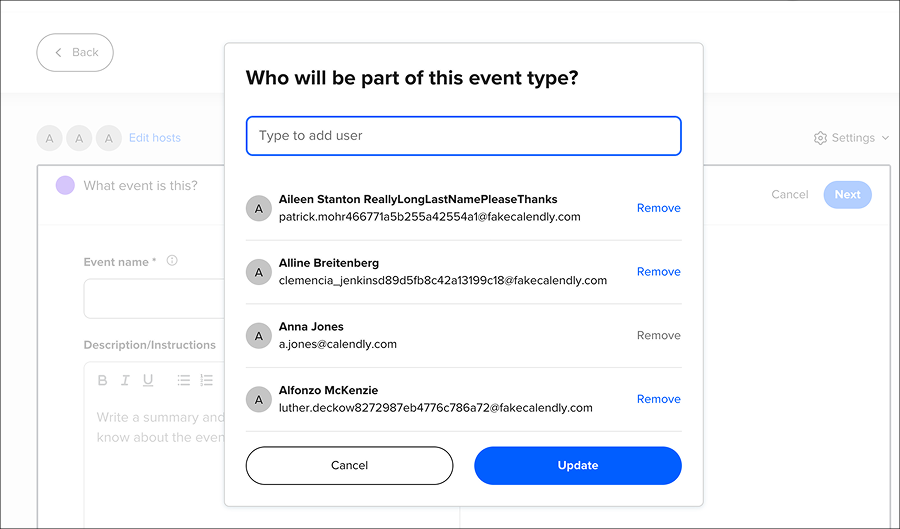
Shared events types: a collaboration primitive
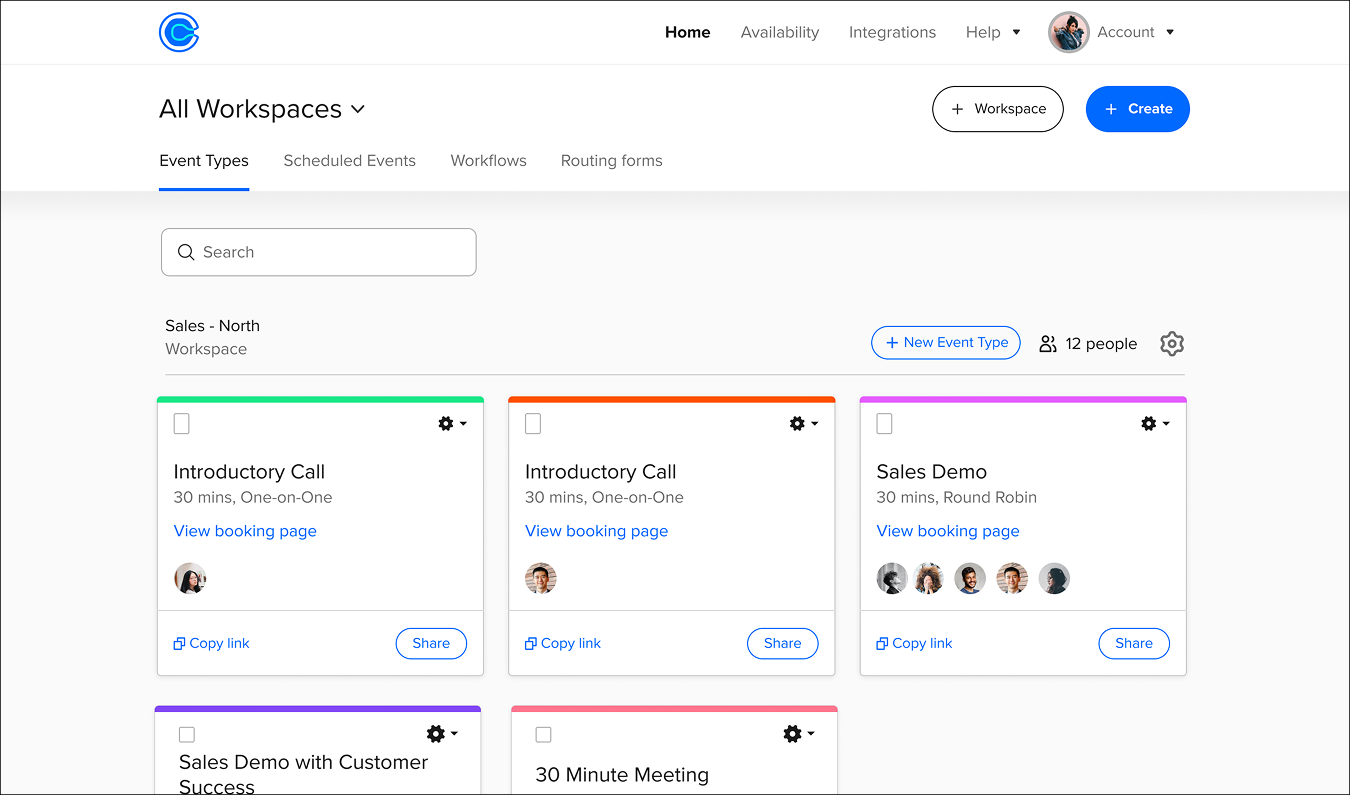
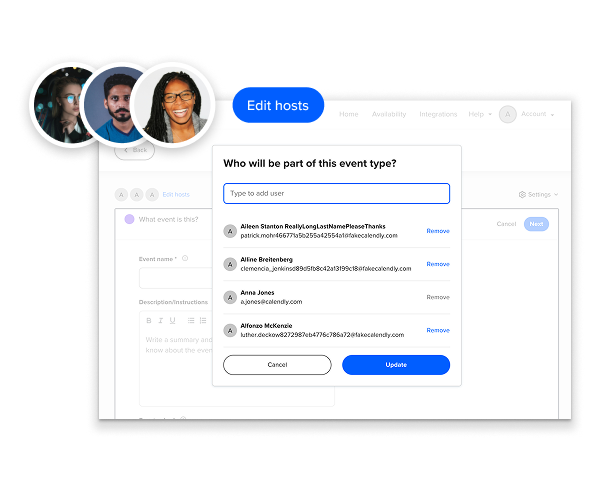
When scheduling became collaborative, the product needed a new building block. We experimented with Shared Event Types, allowing people within the same Calendly account to collaborate on a single event type—without duplicating setups or coordinating through workarounds.
View project overview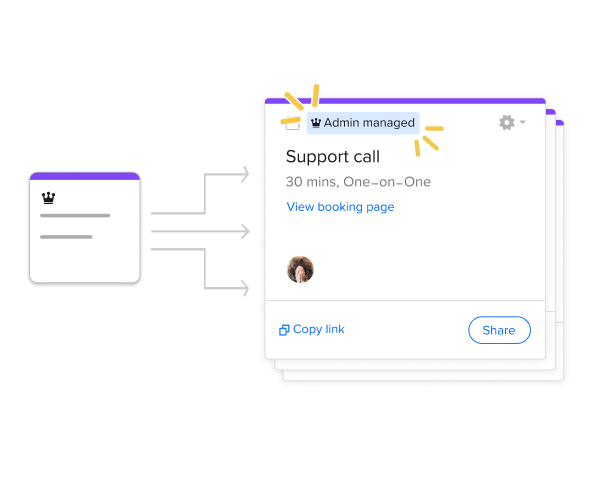
PHASE 2
Turn team usefulness into admin-ready standardization
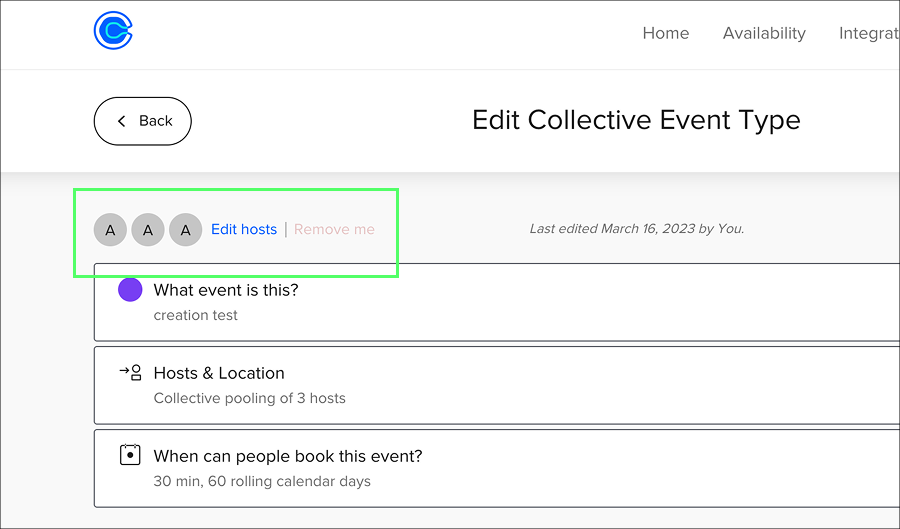
That insight shaped the next leap: Admin-Managed Event Types—a way for managers to create, distribute, and maintain event types with the right settings (branding, language/tone, structure) so every customer interaction stayed consistent and premium.
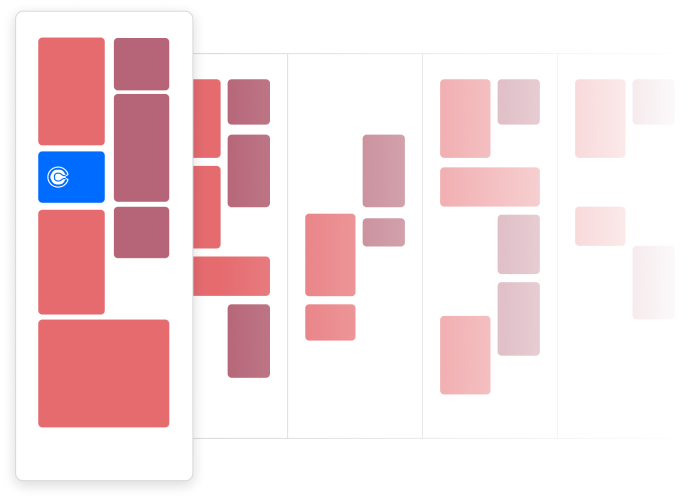
View workThe results was a whole lot of calendar tetris requiring extra coordination internally just to get the right people on external calls.
Common use cases:
Sales pulls a SME into a call
Sales hands off to Customer Success / Account Management
Teams need consistent scheduling experiences across reps
PHASE 3
Earn enterprise trust with security + compliance
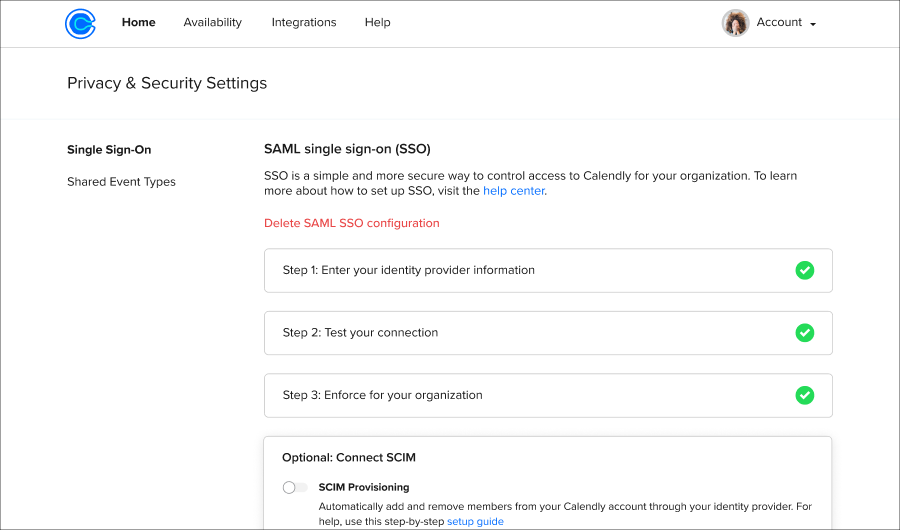
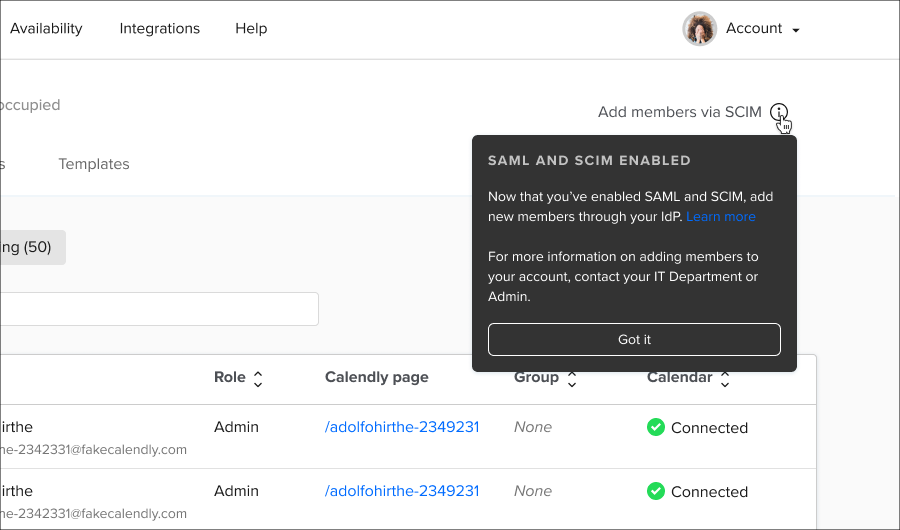
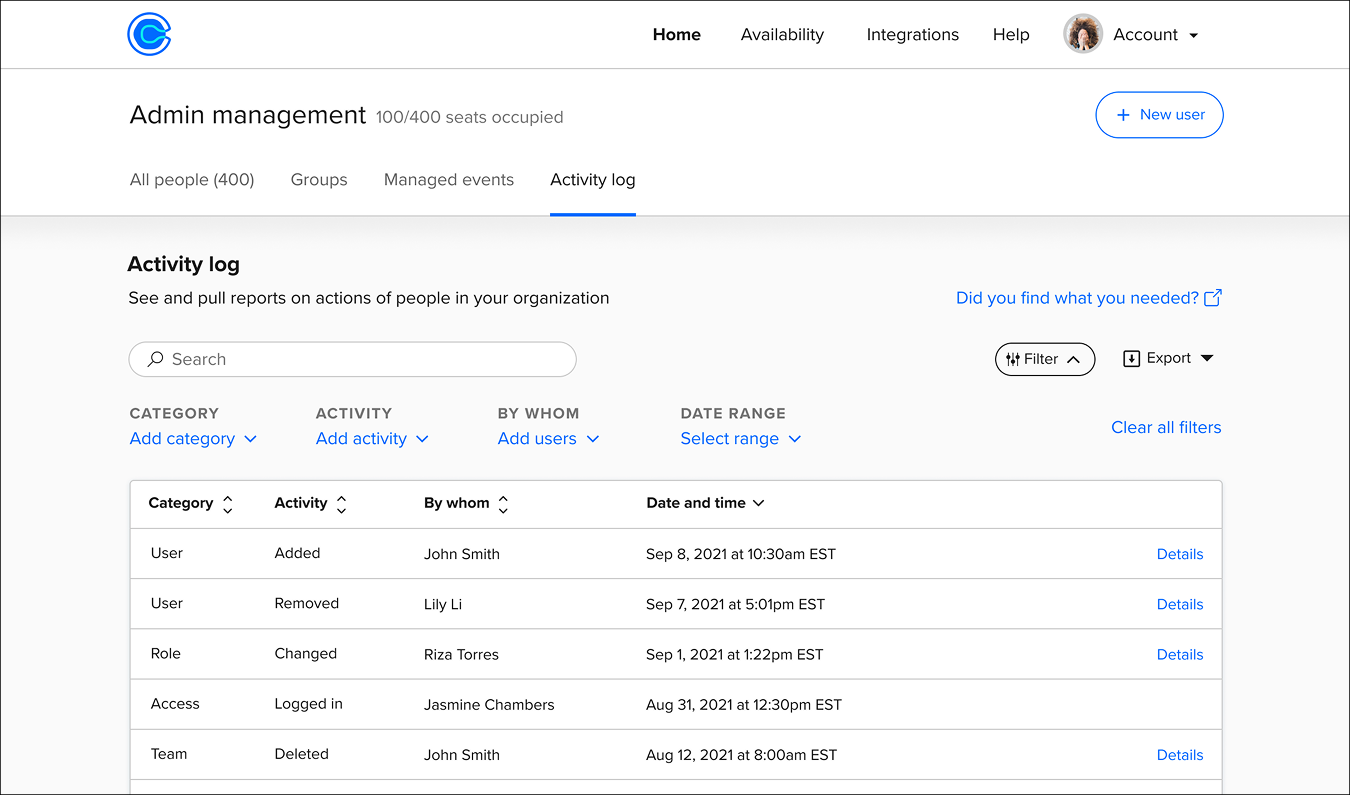
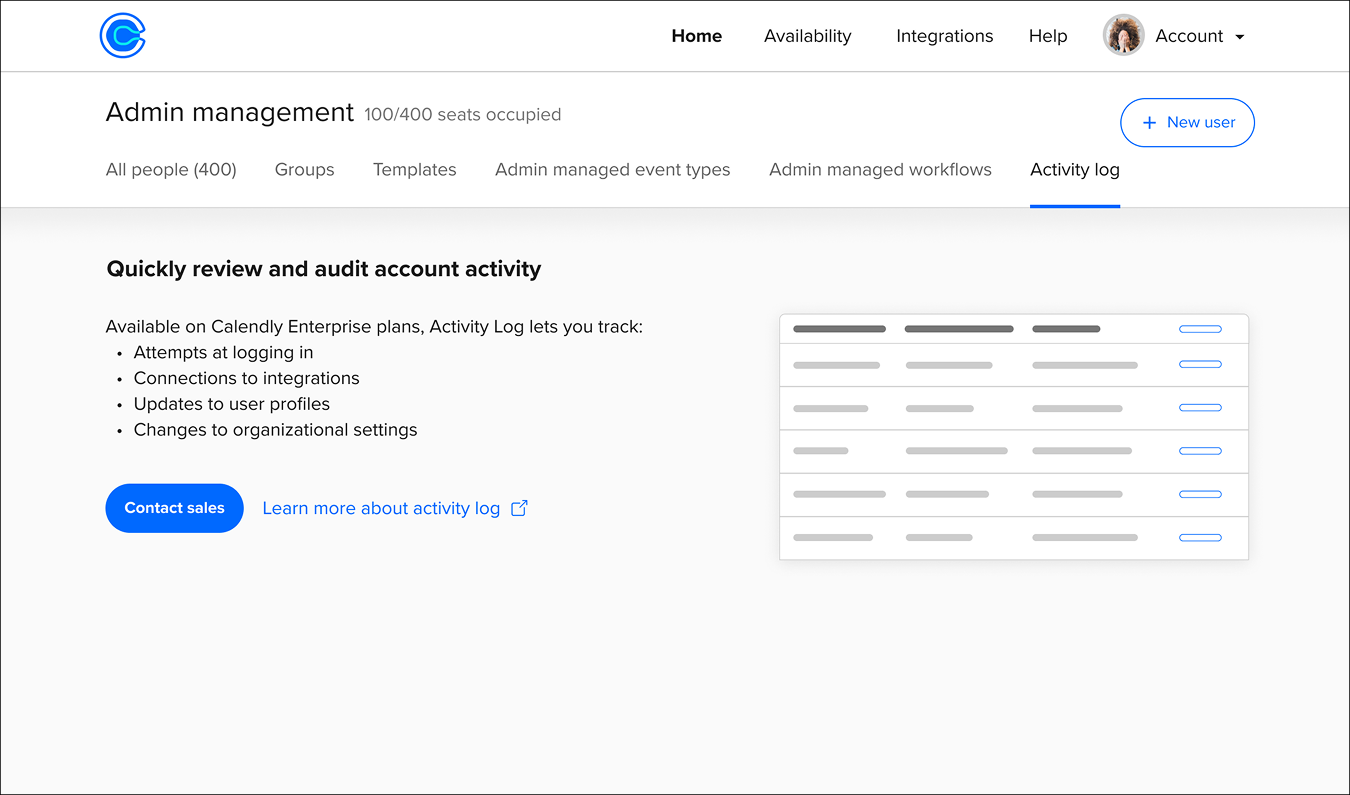
As larger customers entered the funnel (e.g., Adobe), collaboration and governance weren’t enough. Enterprise buyers required strong standards for identity, access, and accountability. In tight collaboration with engineering, I designed a SAML/SSO integration and an Audit Log. This unlocked our Enterprise Tier offering.
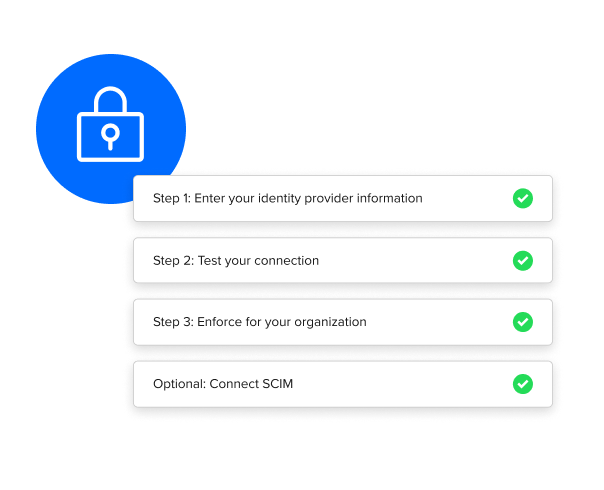
SAML/SSO to meet enterprise identity requirements
View project overview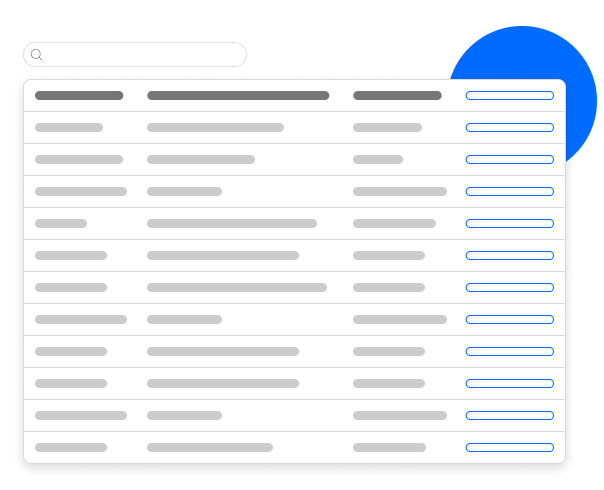
Audit Log to provide traceability and administrative confidence
View work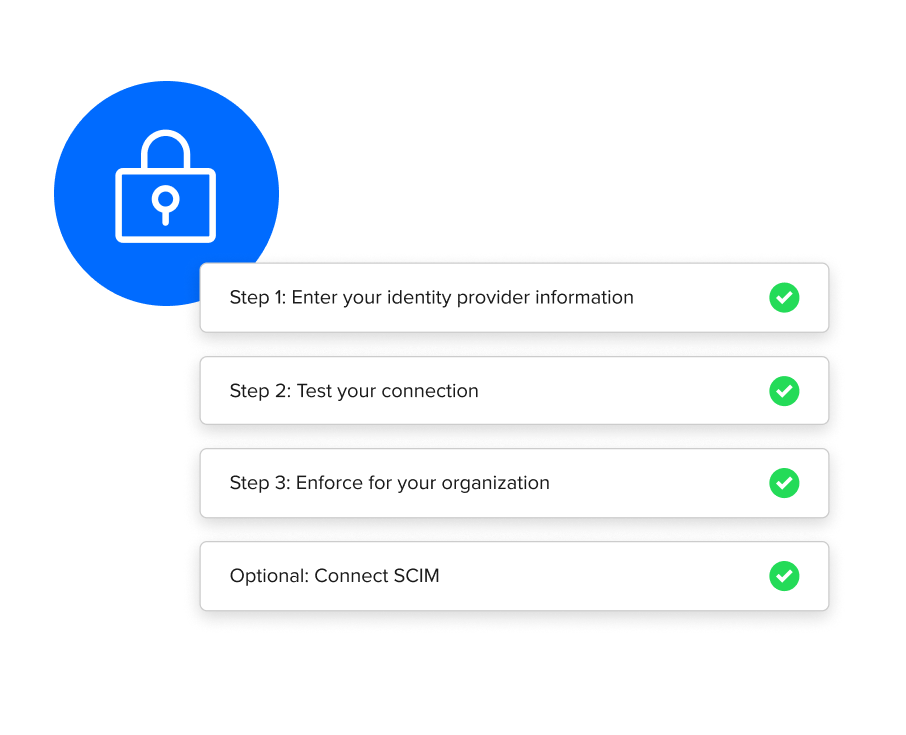
SAML/SSO to meet enterprise identity requirements
View project overviewAudit Log to provide traceability and administrative confidence
View project overviewPHASE 4
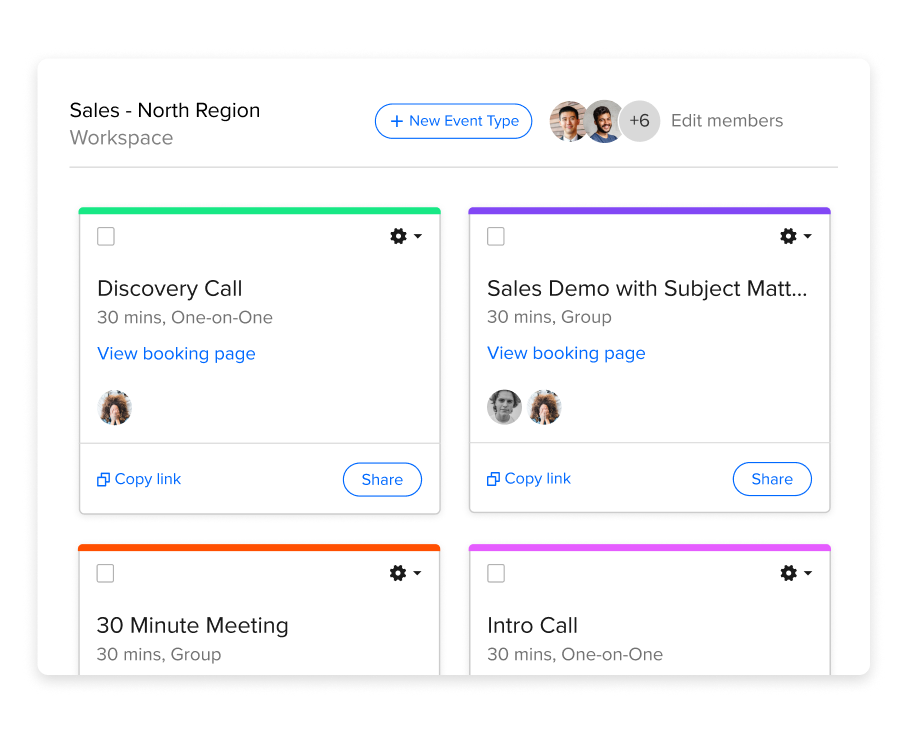
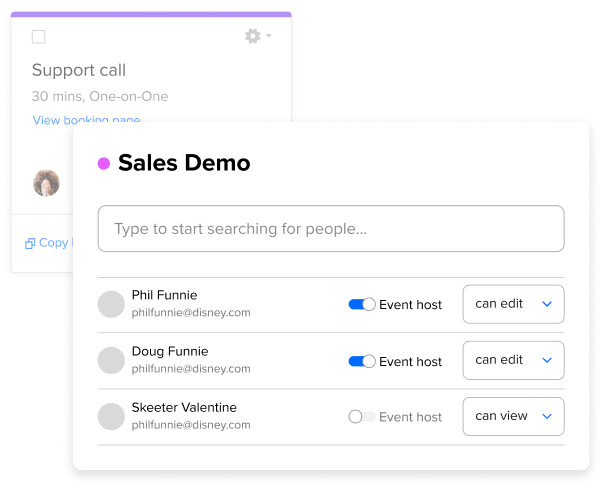
Build the org model with structure + permissions that scale
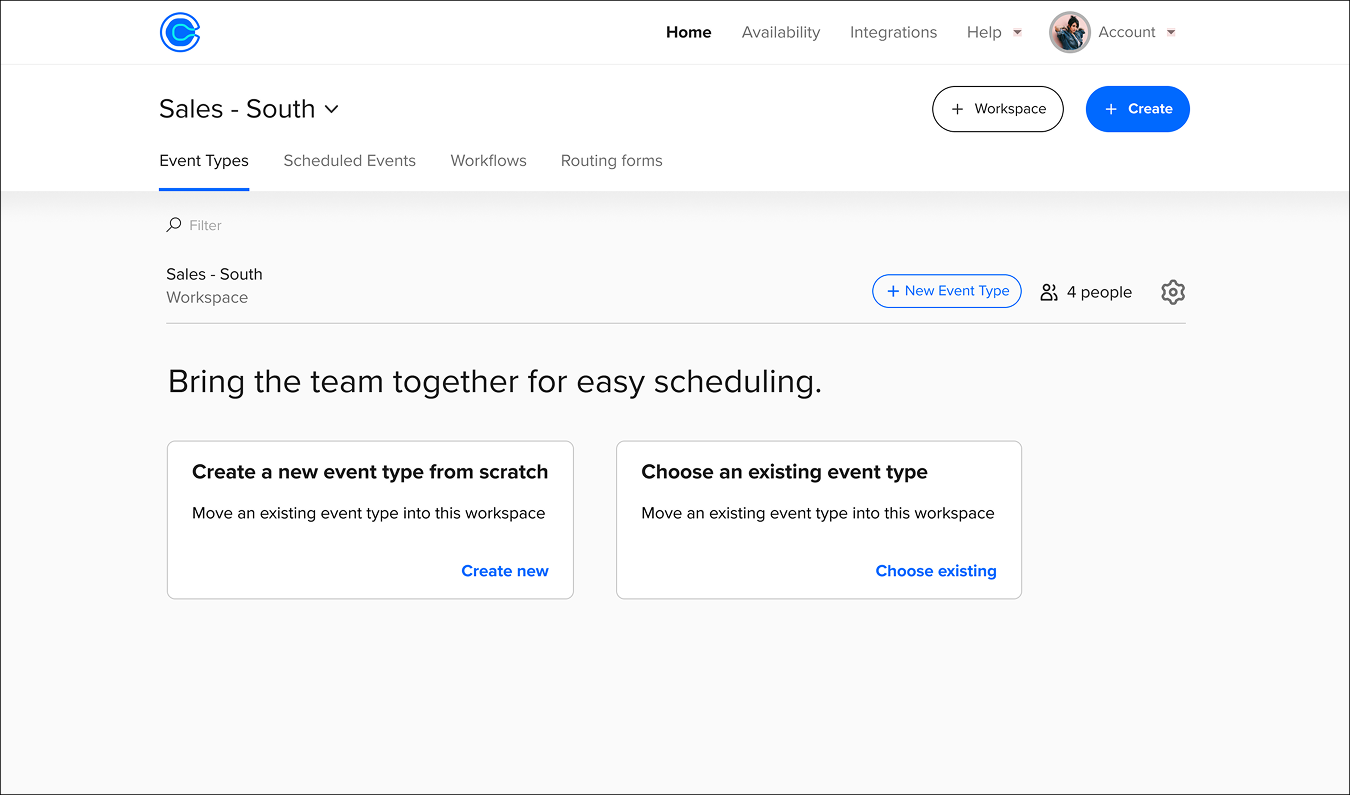
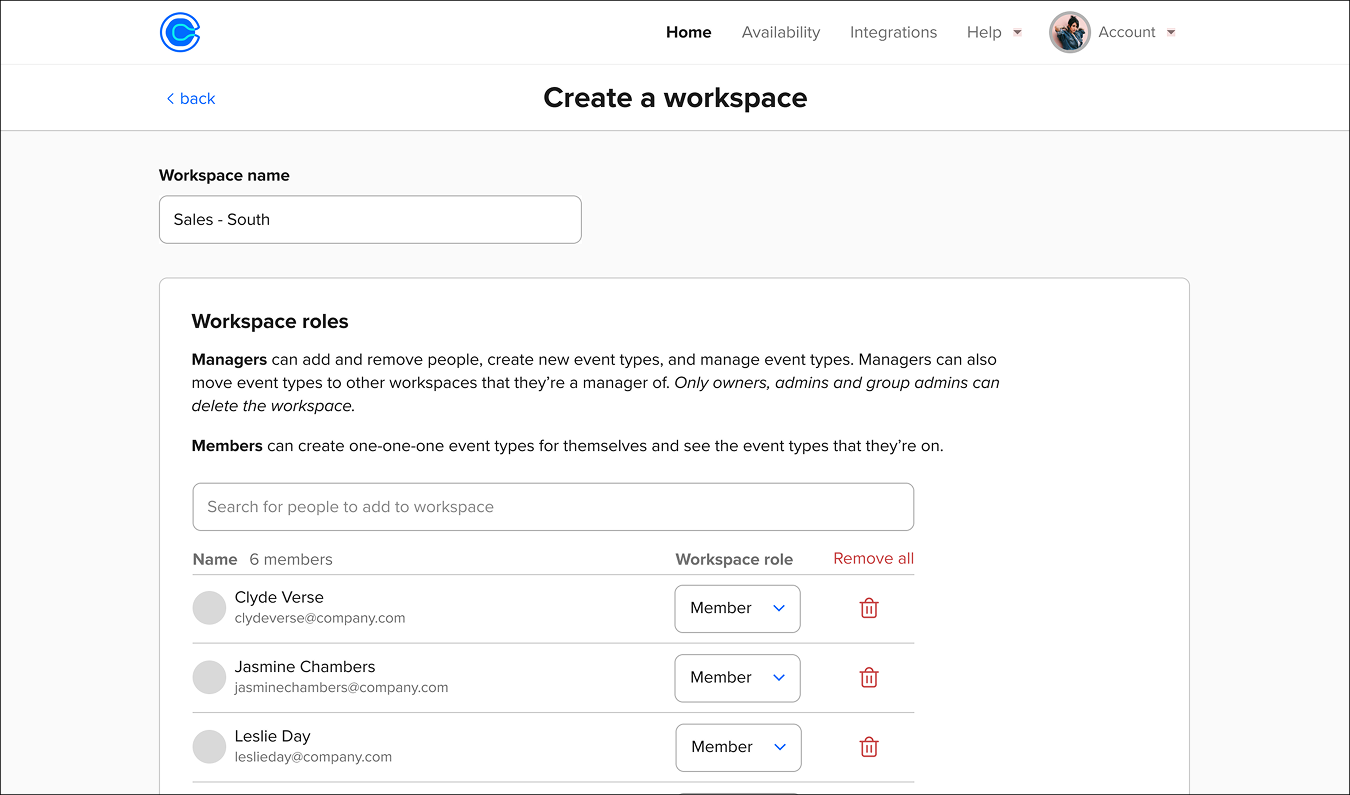
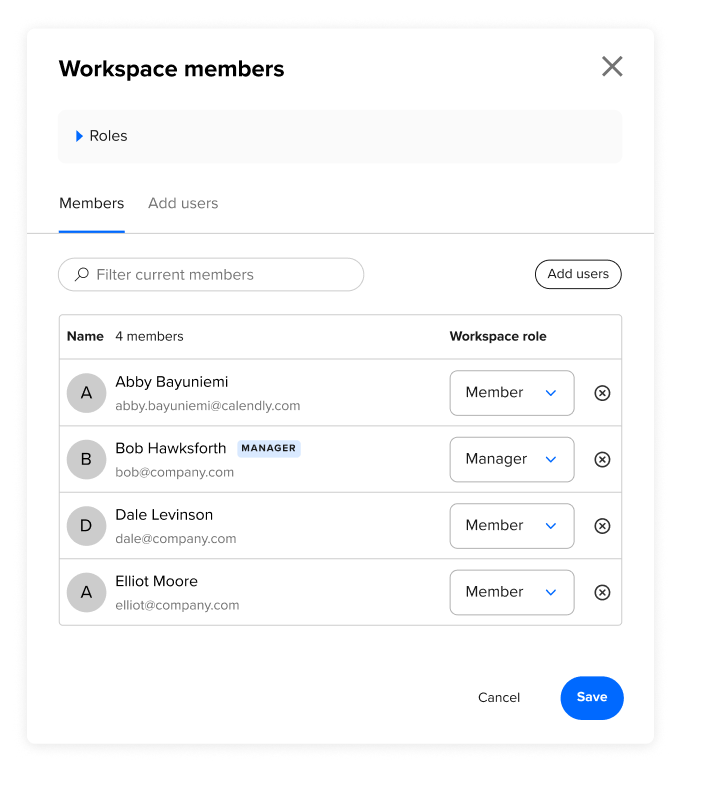
Collaboration in companies became even more essential in 2020. As adoption grew, we needed clear organizational structure and safe controls.
PHASE 5
Help managers measure adoption and operate the system
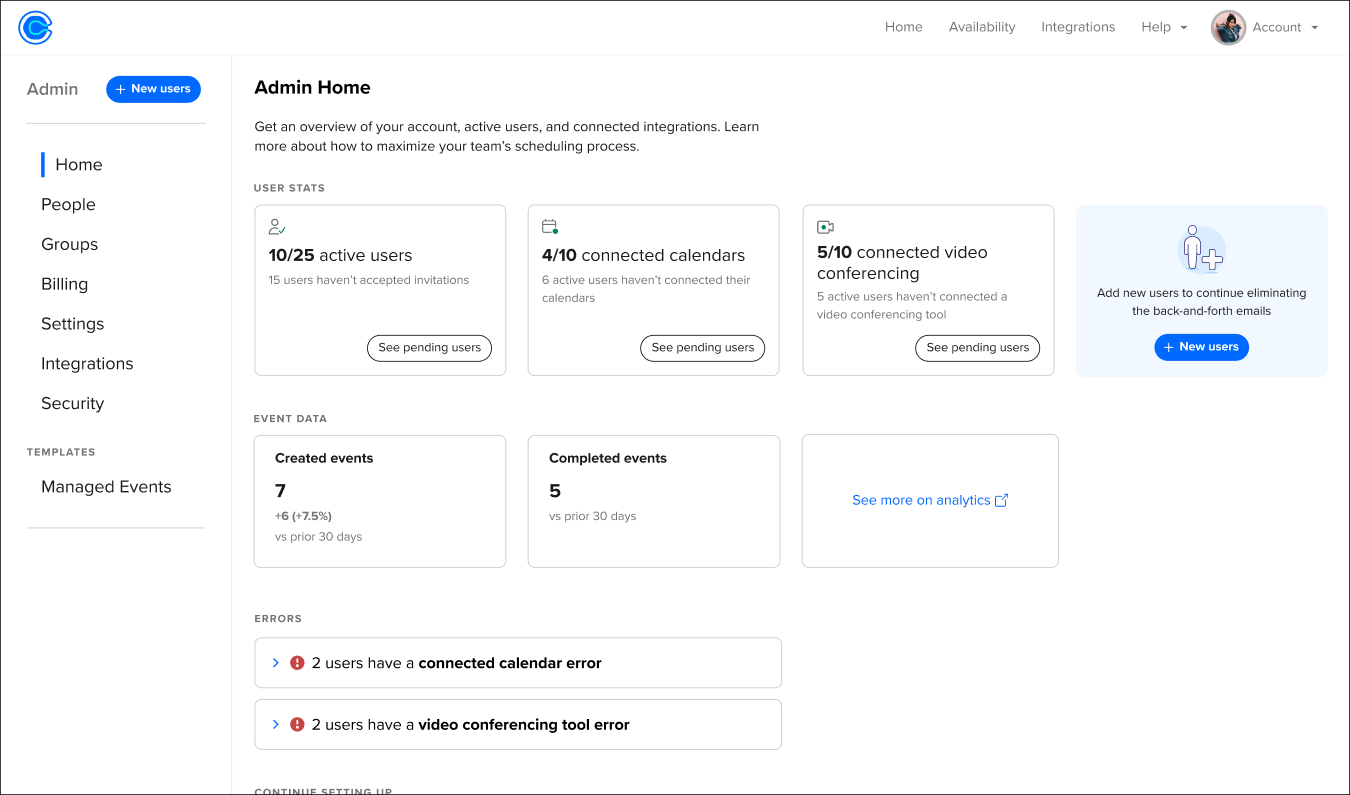
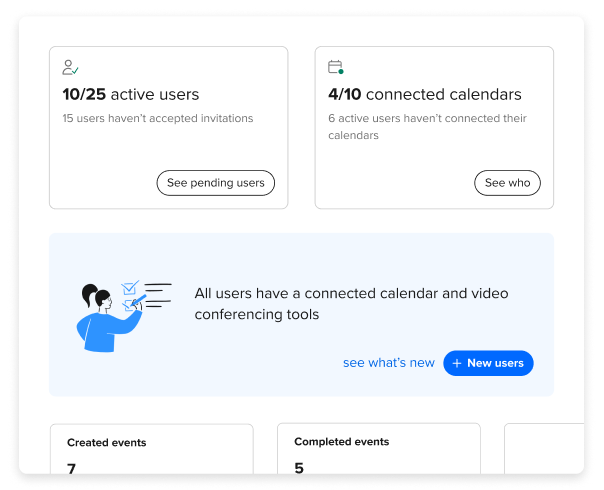
As Calendly became a customer-facing operational tool, leaders needed visibility into rollout and usage.
Turn team usefulness into admin-ready standardization
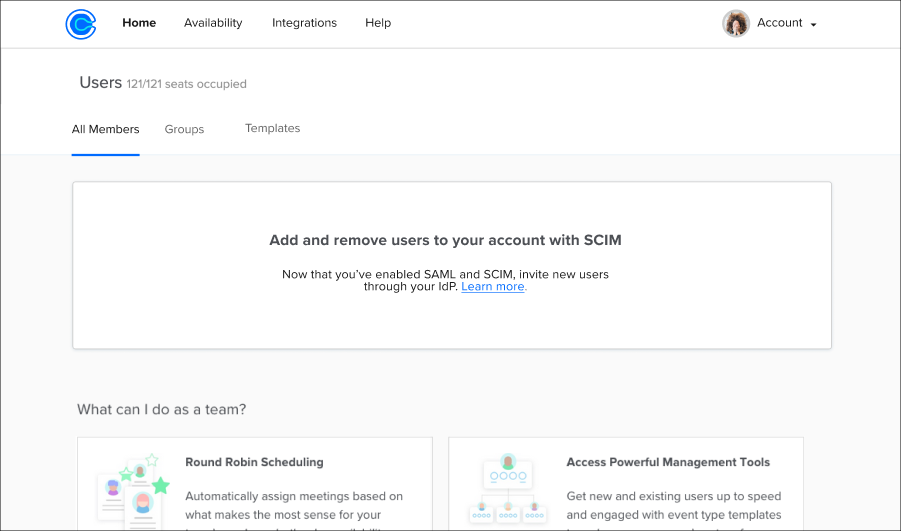
We created an Admin Dashboard so managers could:
- spot team members who needed help getting set up
- reassign unused seats to the right people
- understand adoption patterns across a growing org




COPY EMAIL
Additional B2B initiatives
Alongside the flagship capabilities, I designed and led several initiatives that rounded out the B2B motion and enterprise readiness:
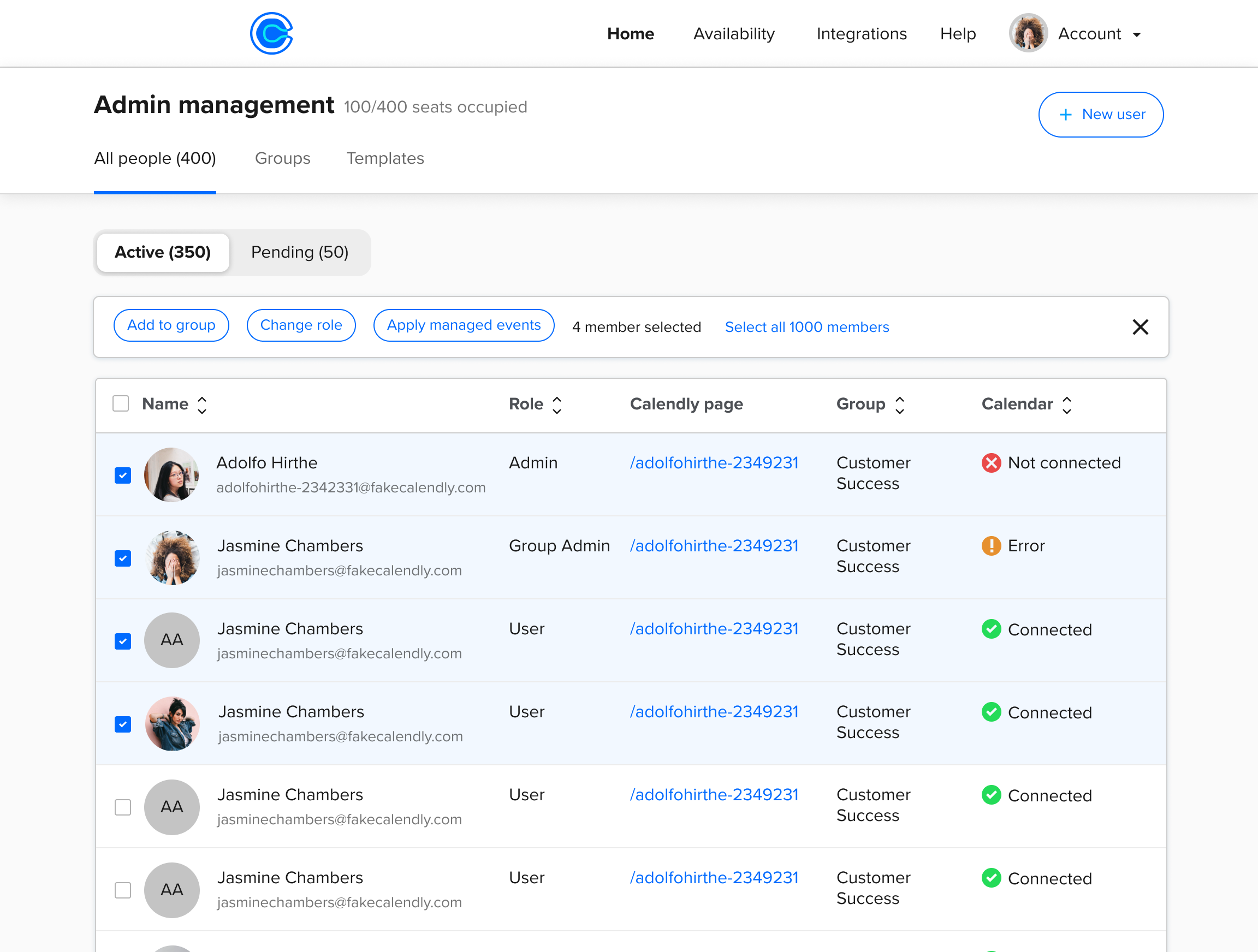
Users page re-design
2021
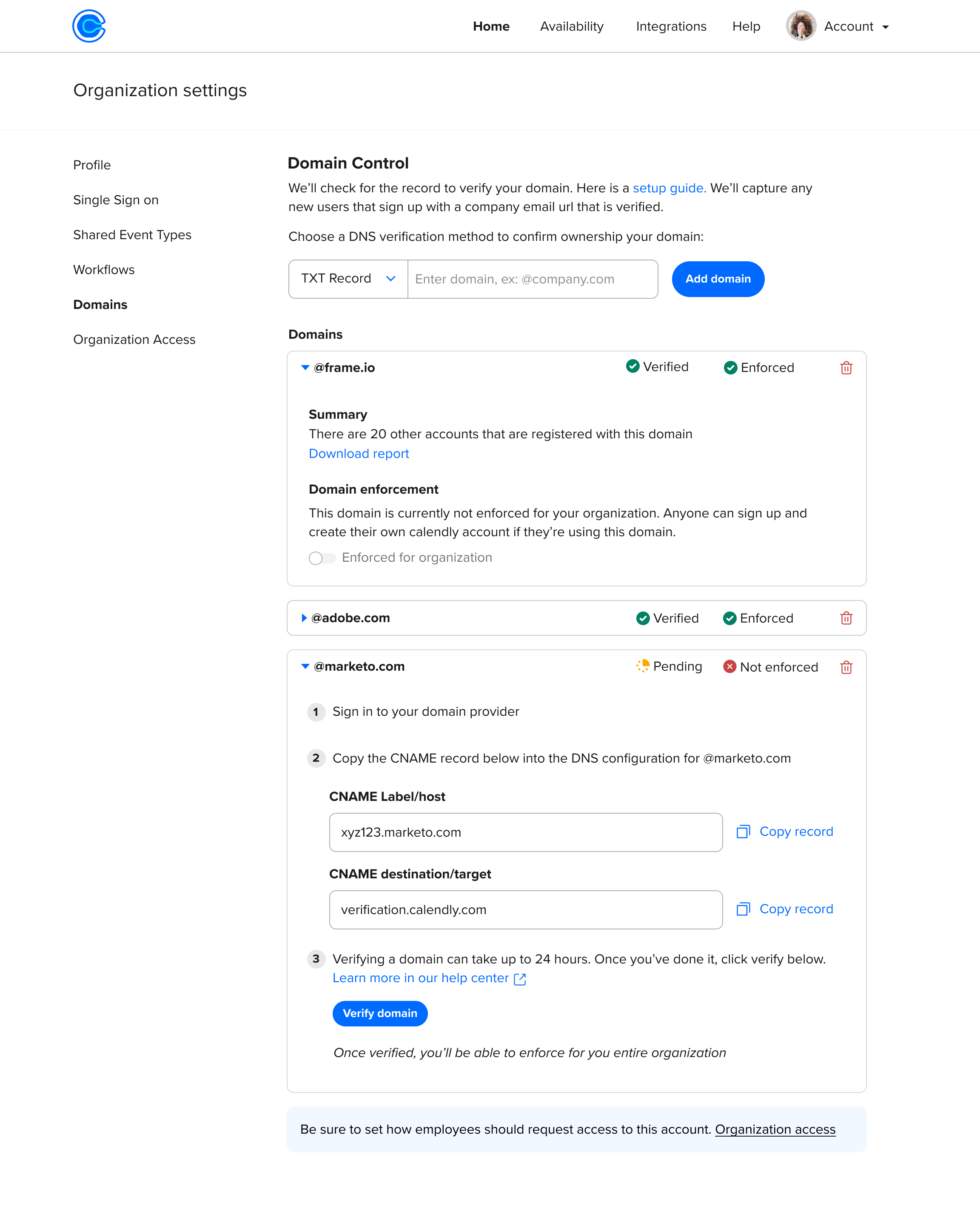
Domain Control
2021
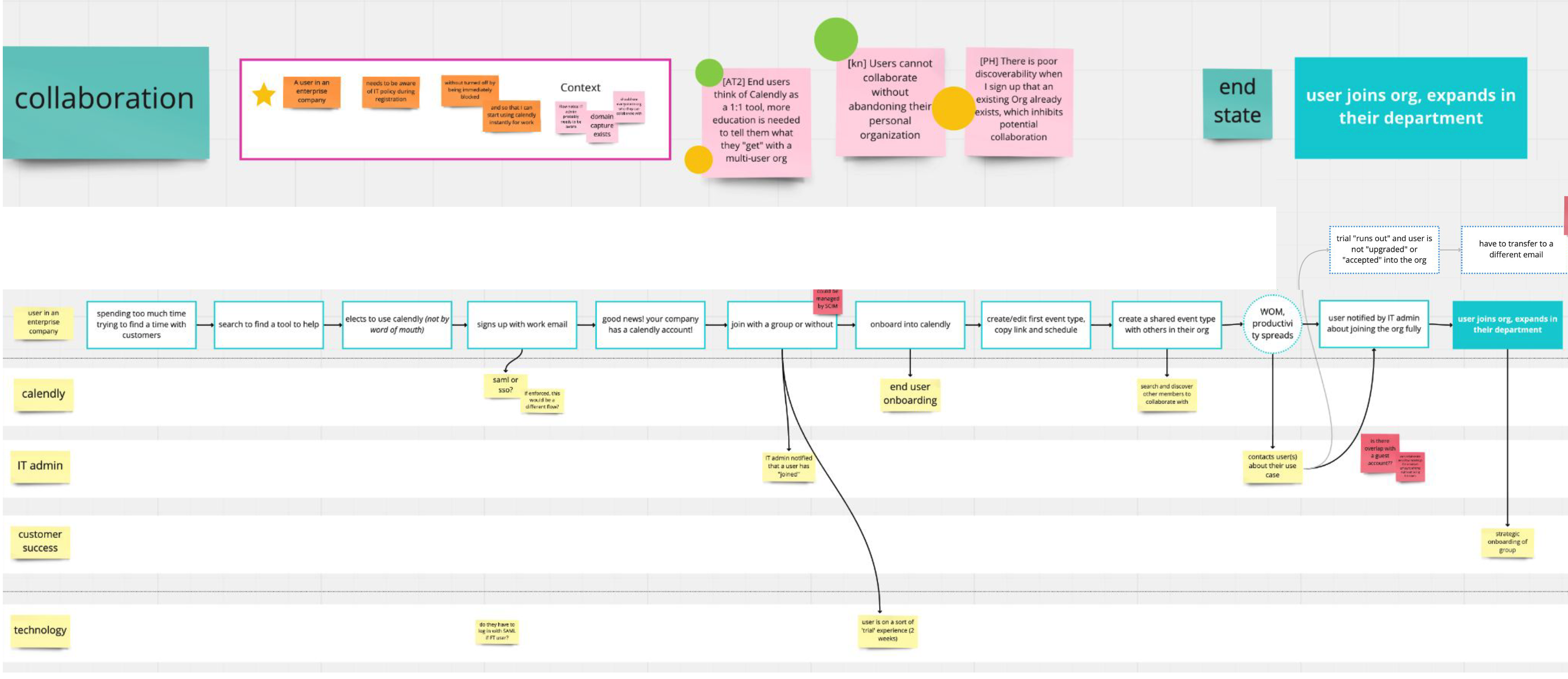
Organization consolidation
Strategy and alignment workshop
2021
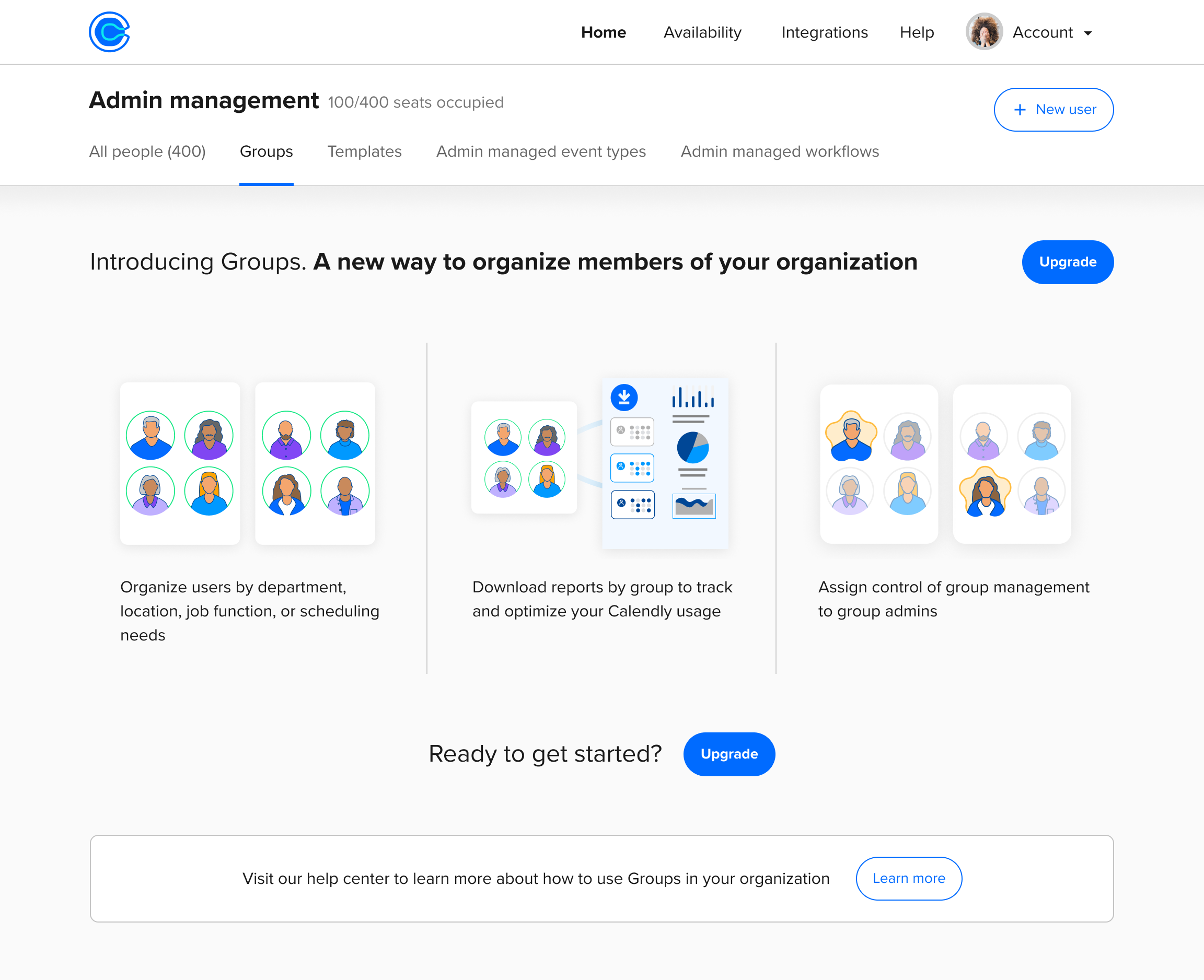
Groups
2022